Maren visits Barbara Yearly
Bones & AllMaren’s visit to Barbara Yearly turns a search for her father into a confrontation with the history his family cannot fully explain. The encounter gives Maren concrete answers about Frank’s childhood and the way he entered the Yearly family, but it also reveals that he has been institutionalized for some time and cannot provide the home she had imagined finding. Barbara offers an address, not a reunion: the visit opens a path toward Frank while leaving the deepest mystery unresolved.
Finding Barbara
The journey to Sandhorn is unusually quiet. Lee seems reluctant to talk, and Maren worries that they may be heading in separate directions the following day. She still hopes he will stay with her after she finds her father. Their arrival brings them past roadside businesses advertising boating charters and holiday cabins, into the small town’s main street, where Lee stops beside a phone booth. There, Maren checks the back of the directory and finds a single listing: Barbara Yearly. The plainness of the discovery contrasts with the emotional weight of what it makes possible. Her father’s family has been reduced, at first, to a name, an address, and a phone number.
Maren finds Barbara at the bottom of her driveway, mailing a letter. Barbara wears a gray shawl cardigan and shearling slippers despite the sunny afternoon, and she draws her collar close and shudders as Maren approaches. She turns away and walks up the driveway rather than greeting her. When Maren catches up, Barbara studies her and asks how she found her. Maren unfolds her birth certificate, and Barbara notices that she has been given the Yearly name. Maren answers that her parents were married. The exchange establishes both the family connection and its guardedness: the document proves Maren’s claim, but it cannot tell her how she will be received.
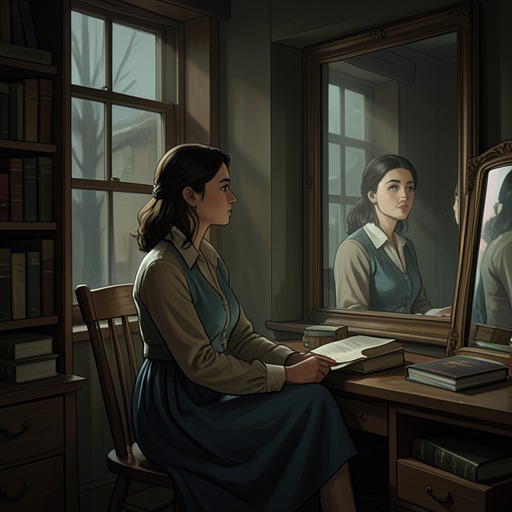
Inside, Barbara’s restraint continues through small, careful gestures. She fills two glasses at the faucet, sets one beside Maren, sits opposite her, and waits with her eyes on the blank Formica. Maren cannot bring herself to call Barbara her grandmother, instead asking whether she is her father’s mother. Barbara explains that she and her husband took Frank in when he was about six. She is surprised that Maren’s mother never told her. The revelation changes the terms of Maren’s search: the family whose name she carries is Frank’s adoptive family, and her mother had left that fact out of her history.
The story of Frank’s childhood
Barbara says that Frank was found under mysterious circumstances and admits that she and her husband may have been too eager to overlook what they knew. When Maren presses her, Barbara initially insists that no one will ever know what really happened. Her eventual account is specific, but incomplete. Frank was found at a rest stop on Route Thirty-five outside Duluth, about eighty miles from Barbara’s home. Two people at the gas pump saw a strange-looking man take the boy off a Trailways bus and lead him behind the building. When they became concerned, they unlocked the restroom and found Frank unconscious and covered in blood; the man was gone.
The gas-station owner called the police, who took Frank to the hospital. No one found his parents or the man who had hurt him. Frank remembered nothing from before the hospital. When the adoption agency contacted Barbara and her husband, they visited him there and offered to take him home. They named him Francis, after Barbara’s father-in-law. Barbara recalls that Frank looked so much like their son Tom that he seemed as though the two boys could have been brothers. She also acknowledges that adopting him may have been against their better judgment. Her account leaves the assault unexplained, but shows how resemblance, bereavement, and the wish to make Frank their child became entangled in the adoption.
The visit also places this account within Barbara’s continuing grief. She speaks of Tom as someone she lost and says Frank would have been forty that year. Maren recognizes the pain behind the story and expresses sympathy, then tries to turn the conversation toward what Frank was like as a boy. The available encounter does not give her a fuller portrait of his childhood. Instead, Barbara’s memories keep returning to the child she had already lost and to her own doubt about whether taking Frank in could replace him.
A destination that disappears
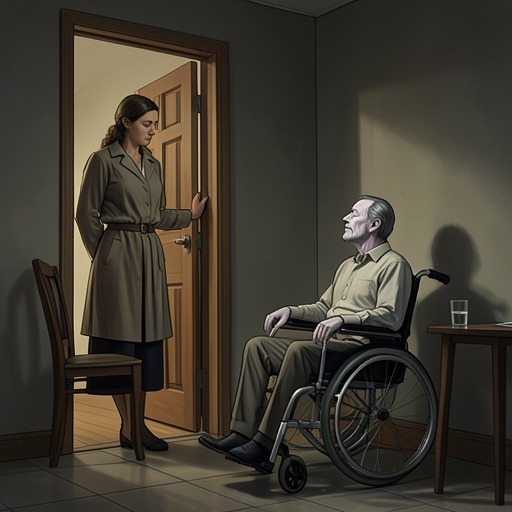
Maren asks whether she can live with her father. Barbara responds that this will not be possible: Frank has been institutionalized for some time. The news abruptly collapses the future Maren had pictured, a place where she might find her father and make a home with him. She sits staring at her hands and tries not to cry. Even as she absorbs the loss, she imagines that Frank may not be so ill, that he might be glad to see her, and that they might still listen to Revolver while he fries bacon. She then steadies herself around a narrower purpose: she came for answers.
When Maren tells Barbara that Frank was not a stranger and reminds her that Barbara chose him, Barbara replies that she did have a son and that thinking she could replace him was her mistake. Looking toward a black cat beneath a maple tree, she takes responsibility for the adoption’s failure in her own terms, saying there is no one to blame but herself. Her account centers on the loss of Tom and the limits of what the family made afterward; it does not become the uncomplicated welcome Maren had hoped for. Maren thinks of her mother and concludes that she does not need her, even as this meeting makes clear how much she has wanted the history her mother withheld.
What the visit leaves behind
Barbara gives Maren an address for the hospital where Frank lives. She copies it from a faded, floral-covered address book onto a matching notepad and hands it to her. This practical exchange is the visit’s decisive outcome: Maren cannot reach the father she imagined through Barbara, but she now has a place to go. Barbara says she hopes Maren does not mind being asked to leave before dinner, explaining that she has not cooked since her husband died. The hospitality is limited, but the address is an act of assistance.
As Barbara sees Maren to the door, the living room comes into view: its dark-paneled walls are covered with frames, but the pictures are all of Tom. The room makes visible the grief that has shaped Barbara’s account of Frank and the family’s inability to treat his adoption as a replacement that could undo that loss. Barbara shakes and releases Maren’s hand, wishes her luck, and retreats into the gloom; the front door swings shut and the lock clicks. Maren leaves with less than she came for, but not with nothing. Barbara’s testimony gives Frank’s early life a history, while its gaps—who the man was, why Frank was injured, and what Frank remembers—remain beyond the reach of this visit.